Pink butcher meat wrapping paper: 100% natural, uncoated original butcher paper. If you’re grilling, you’ll appreciate it!
Pink butcher paper is a well-known staple in the BBQ world across the United States. Its primary use is in the wrapping phase required at the end of the slow barbecue cooking process. Wrapping meat is almost essential for certain cuts, but the type of wrapping material itself is another matter. The two most well-known options are this product, Pink Butcher meat wrapping paper, and aluminum foil. Experienced cooks almost always wrap brisket in meat wrapping paper, but many wrap short ribs in aluminum foil.
Wrapping meat in aluminum foil: The foil seals hermetically, so more juices and fat remain in the meat after wrapping. It also makes it easier to keep the grill clean. However, it is important to note that heat treatment at high temperatures and regular use can be harmful to health. (Scientific study and devastating results on the topic here)
Meat packaging with Pink Butcher butcher paper: This type of paper is not just plain greaseproof paper. It contains only 100% natural ingredients with FDA certification, without bleach or other additives. Furthermore, it contains no wax or other coatings that could leach off during cooking and melt onto the meat. Another advantage is that while it retains moisture in the meat, it still allows for some evaporation, so the crust doesn’t get too soggy. Thanks to its absorbent properties, it also soaks up excess moisture and fat that might otherwise drip out.
In the US, everyone uses pink butcher paper for BBQ—be a pro too!
Size: 61 cm x 50 m. 1 pc = 1 roll. We do not break up rolls; they can only be ordered by the roll!
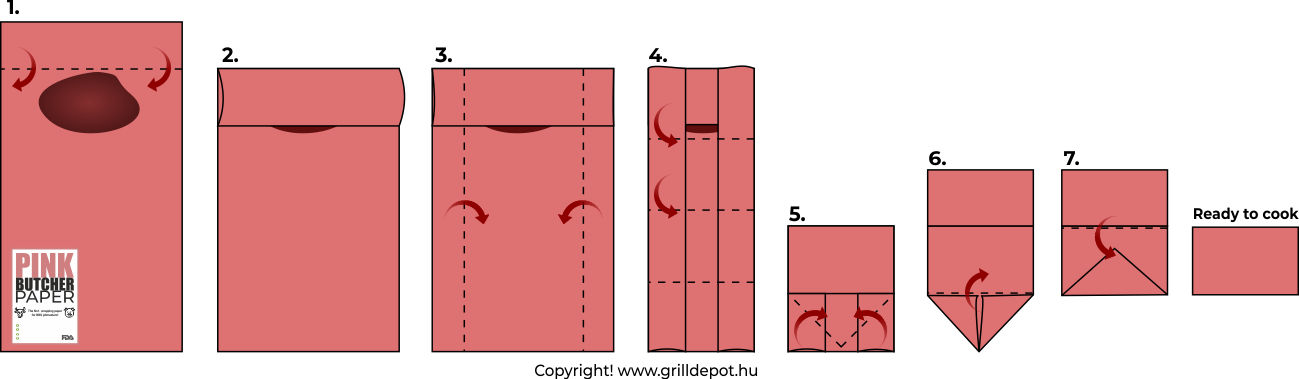
The wrapping process: The wrapping itself is not a complicated process. The most common BBQ cuts, such as brisket or short ribs, are wrapped using similar steps. The goal is to ensure there are no gaps through which moisture can escape from the meat. The following illustration will help you:
| Did you know? The pink butcher paper is actually closer to peach in color, but "pink" is still its most common name. The color is not a dye but a natural base color, since unlike standard white, gray, or brown grease-proof paper, it contains no chemicals—such as bleach—which are almost essential in paper manufacturing. |